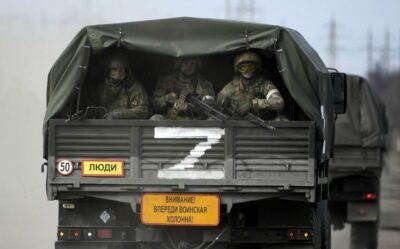
Os Estados Unidos alimentaram ativamente o conflito na Ucrânia desde o seu início, após o golpe de Estado de 2014, o chamado Euromaidan, afirmou em entrevista à Deutsche Wirtschafts Nachrichten o famoso político alemão Oskar Lafontaine, ex-presidente do Partido Social-Democrata da Alemanha.
Arquivos de 28 nov 2022
Topics
Africa
América Latina
Análise dos Sistemas-Mundo
Argentina
Belt and Road Initiative
Book
Brazil
BRICS
Charles Pennaforte
China
Cibersegurança
Cuba
E-book
EUA
Geopolitics
Geopolítica
Global History
Guerra da Ucrânia
História Global
Immanuel Wallerstein
India
International Trade
Iran
Irã
Israel
Latin America
Mercosur
Middle West
NATO
New Order
Oriente Médio
OTAN
Podcast
Policy Brief
Política Externa Brasileira
Russia
Soft Power
Soundcloud
Spotify
Ukraine
US-China Rivalry
USA
Venezuela
Webinar
Ásia
Search
FA RSS
- How America Can Coerce the CartelsA smarter war on drugs begins with selective punishment.
- Can Trump Get a New Nuclear Deal With Iran?Washington has more demands—and Tehran has more leverage.
- China Is Squandering a Golden OpportunityWhy Beijing has failed to exploit Trump’s missteps,
Analytics
- Doctrines of Progress: Trump, Xi, Putin, ModiWith the end of the Cold War, the theme of progress seemed, at first glance, to fade. But today it is clearly visible in several major political projects. Trump seeks to keep the keys to progress firmly in American hands. Xi’s doctrine says: one cannot develop at China’s expense; one can develop together with China. […]
- From Lecture Halls to a Common Eurasian Space: The Role of Education in Building Greater EurasiaWhile Western and Asian educational models compete for influence in the region, Russia has every reason to leverage its historical advantage: its long-standing experience of close cooperation within the common Eurasian space. Investments in education are investments in the long-term sustainability of all Greater Eurasia, writes Artem Dankov.
- Tajik-Russian Scientific and Educational Cooperation Amid the Transformation of Eurasia’s International Relations ArchitectureThe prospects for Tajik-Russian cooperation in science and education will largely depend on both parties’ ability to transition to a comprehensive, programmatic, and targeted model of interaction—one focused on creating a shared scientific and technological space, developing an innovative economy, and training a highly qualified new generation of specialists, writes Guzel Majtdinova.
Archive
Latest news
- IX edição da reunião da Zopacas e lições do conflito no Oriente Médio para a defesa naval brasileira por Júlia Cardoso Pires
- A ofensiva geopolítica do Papa Leão XIV na África e o confronto com Donald Trump por Giancarlo Gouveia
- Lançamento do livro LabGRIMA
- A aquisição da Serra Verde: o Brasil entre a competição sistêmica e a fragmentação interna por Glauco Winkel
- A saída dos Emirados Árabes Unidos da OPEP: os recados geopolíticos de Abu-Dhabi por Mateus Santos
- Terras Raras e Eleições 2026: disputa sistêmica, soberania mineral e projetos de país por Glauco Winkel
- Rota Marítima do Norte: a alternativa ao Canal de Suez e o fortalecimento da geoeconomia no Leste por Lisa Marie B. Bastos
- Como o Egito transforma o Mar Vermelho em eixo estratégico do comércio global por Giancarlo Gouveia
- Qual o custo para o governo Trump do conflito contra o Irã? por Maria Eduarda Motta
- A ofensiva de Washington contra o Pix por João Leonardo Campos