CONFIRMED SPEAKERS
Ewa Bulska – University of Warsaw, Poland
Title of the lecture: Analytical challenges towards supporting the pharmaceutical industry
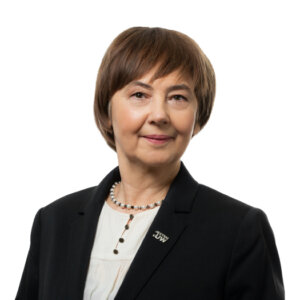
Dr. Ewa Bulska is a Professor of Analytical Chemistry, Director of Biological and Chemical Research Centre, University of Warsaw, Poland; co-author of over 240 scientific publications and more than 20 book chapters. Her scientific interest covers the area of the metabolism of biologically active substances, including proteomics and metabolomics as well as the investigation of cultural heritage objects, including the metrological aspects of measurements. She received a number of awards, in between Bunsen-Kirchoff Award (by Gesellschaft Deutscher Chemiker); IUPAC’2015 Distinguished Women in Chemistry, as well as Knight’s Cross Polonia Restituta of the Republic of Poland. Recently she was awarded by Ioannes Marcus Marci Spectroscopic Society (Czech Spectrometry Society) with Ioannes Marcus Marci Medal. She was awarded by fellowship at Max-Planck Institute für Metallforschung, Germany; visiting scientist at the University of Umea, Sweden; DAAD fellowship at the University of Darmstadt, Germany. She works actively in various non-profit organization, she is a member of Executive Board of EUROLAB, Vice-President of POLLAB as well as member of the Executive Committee of the Marie Skłodowska-Curie Society.
Martin Desimone – Federal University of Buenos Aires, Argentina
Title of the lecture: Modern Strategies for Drug Delivery and Tissue Repair.
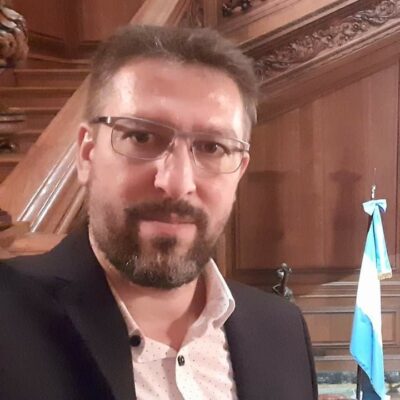
Dr. Martin Desimone, born in Buenos Aires, earned his Pharmacy, Biochemistry, and Ph.D. degrees at the University of Buenos Aires. He completed postdoctoral work in Spain and France before becoming a CONICET researcher and Full Professor at the same university. He also serves as Visiting Professor at the Universidade Federal do Rio Grande, Brazil. Dr. Desimone has received multiple honors, including the Innovar Award (2016, 2017), the “Dr. José A. Balseiro” distinction, and four “Academic Excellence” awards. He has supervised 11 Ph.D. and 3 international master’s students and currently mentors five Ph.D. candidates. With over 140 publications, 23 book chapters, 3 edited books, and 4 patents, he has contributed significantly to drug delivery systems using nanoparticles and 3D printed scaffolds for wound healing. His research focuses on nanomaterials and biomaterials for biomedical and environmental applications, supported by a strong multidisciplinary collaboration network. He has presented at over 40 international conferences.
Fernanda Morrone – Pontifical Catholic University of Rio Grande do Sul, Brazil
Title of the lecture: Pharmacology and the Adenosinergic System: Present and Future.
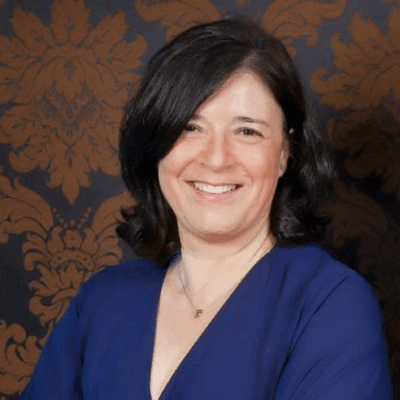
Dr. Fernanda Marrone holds a degree in Pharmacy from the Catholic University of Pelotas, a master’s degree in Biological Sciences (Biochemistry) from the Federal University of Rio Grande do Sul (2002), and a Ph.D. in Biological Sciences (Biochemistry) from the same institution. She is a CNPq Productivity Fellow and Full Professor at the School of Health and Life Sciences, PUCRS, where she teaches Pharmacology and Hospital Pharmacy. She is a researcher at the Brain Institute of RS (InSCer). She is a member of the Brazilian Society of Therapeutic and Experimental Pharmacology, the Brazilian Society for the Advancement of Science, and the Brazilian Purine Club. She served as Coordinator of the Scientific Committee of the School of Pharmacy, PUCRS (2010–2012), Coordinator of the Professional Master’s Program in Pharmaceutical Biotechnology, PUCRS (2013–2015), and Coordinator of the Scientific Initiation Department at PUCRS (2015–2017). She was Director of Research at the PUCRS Research and Graduate Studies Office from 2018 to 2022. She is a Permanent Professor in the Graduate Program in Cellular and Molecular Biology and the Graduate Program in Medicine and Health Sciences. She has experience in Pharmacology, with particular interest in the study of the purinergic system, ATP, purinergic receptors, and the MAPK pathway in gliomas and esophageal cancer. Her work has received several awards, she maintains strong national and international partnerships, and has ongoing funding acquisition. In 2024, she was awarded the Tübingen Chair for Pharmacy and Pharmacology and served as a visiting professor at the University of Tübingen, Germany.
Angelita Moreira da Silveira – Federal University of Pelotas, Brazil
Title of the lecture: Xantana pruni as an innovation platform.
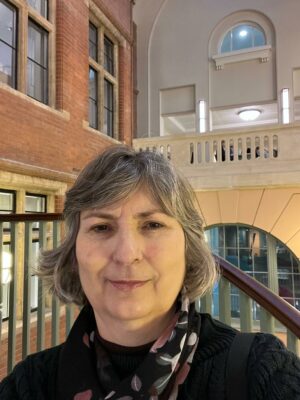
Dra. Angelita Silveira is a Graduated in Pharmacy and Biochemistry from the Catholic University of Pelotas (1992), she holds a master’s degree in Pharmaceutical Sciences from the Federal University of Rio Grande do Sul (1996) and a PhD in Biotechnology from the Federal University of Pelotas (2002). She is currently a CNPq Productivity in Technological Development and Innovative Extension (DT) scholarship holder, level 1C, and a full professor at the Center for Chemical, Pharmaceutical and Food Sciences at UFPel, where she has taught several undergraduate courses since 2007. She works as an advisor in the Postgraduate Programs in Agroindustrial Science and Technology, in the Professional Master’s Degree in Food Science and Technology, and in the Postgraduate Program in Biotechnology. Her academic and scientific career is marked by solid experience in the areas of Pharmacy, with an emphasis on pharmacotechnics and pharmacognosy, industrial and fermentation microbiology, and food science and technology. Her main research topics include the production, characterization, chemical modification and application of extra- and intracellular biopolymers in multiple areas. These efforts have resulted in the co-authorship of 1 international patent granted in the USA, 5 in Brazil and 4 more applications filed in Brazil. In addition, she is the author of books and chapters in the areas of food, biopolymers and hydrocolloids, with more than 45 publications in indexed journals. As a researcher at EMBRAPII Unidade InovaAgro, she has led innovative projects with approved funding, consolidating her contribution to scientific and technological development in Brazil.
Érico Marlon de Moraes Flores – Federal University of Santa Maria, Brazil
Title of the lecture: Challenges for the Determination of Elemental Impurities in Drugs and Pharmaceutical Products.
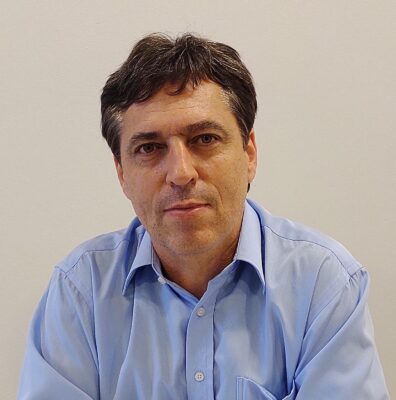
Dr. Érico Flores is a Full Professor at the Federal University of Santa Maria (UFSM) and a CNPq research fellow. He works in the fields of atomic spectrometry and analytical chemistry applied to contaminant control in pharmaceuticals, drugs, food, and biological and environmental samples. Throughout his career, he has held several positions, including Director and Deputy Director of the Analytical Chemistry Division of the Brazilian Chemical Society. He has been a full member of the Brazilian Pharmacopoeia for over 20 years, currently serving as the Coordinator of the Technical Committee on Pharmaceutical Inputs and as a member of the Working Group on Elemental Impurities of both the Brazilian Pharmacopoeia and ANVISA. He was the first and only Brazilian to serve as Vice-President of the Analytical Chemistry Division of IUPAC. He also served two terms as Scientific Director of the Rio Grande do Sul State Research Foundation (FAPERGS) and coordinated the International Relations Office at UFSM. He is currently Deputy Director General of the China–Latin America Alliance for Research and Innovation in Agriculture. Several methods developed under his coordination are officially adopted for quality control or as international reference standards, such as the certified reference material NIST 2682c (2015) and official methods of the Brazilian Pharmacopoeia for elemental impurity control. He is Executive Editor of Ultrasonics Sonochemistry (Elsevier) and the Brazilian Journal of Analytical Chemistry, and a member of the editorial board of Atomic Spectroscopy. He holds several national and international patents—including a product sold in over 50 countries—and is the author of book chapters, a book published by Elsevier, and has supervised over 90 graduate students. He has published over 450 articles, with more than 17,000 citations (h-index = 64). He is one of Brazil’s most internationally recognized researchers in analytical chemistry, having received numerous awards and given lectures in over 25 countries.
Pio Colepicolo Neto – University of São Paulo, Brazil
Title of the lecture: Algae in the Green and Circular Economy for the Generation of High-Value Inputs.
Dr. Pio earned a Bachelor’s degree in Chemistry from UNESP-Araraquara (1982), a Ph.D. in Biochemistry from the Department of Biochemistry at the University of São Paulo’s Institute of Chemistry (IQUSP) (1986), and completed postdoctoral training in Biochemistry and Molecular Biology at the Department of Molecular and Cellular Biology, Harvard University, Biological Laboratories (1990). He also completed a specialization in Electron Microscopy at Université de Paris VI (Pierre et Marie Curie) (1988). He obtained his Habilitation (Livre-Docência) in 1993 from the Department of Biochemistry, University of São Paulo. He was a visiting professor at the Department of Molecular and Cellular Biology, Harvard University Biological Laboratories (2000); the Department of Botany, Stockholm University, Sweden (2001 and 2003); and at The Ohio State University, in the Plant Cellular and Molecular Biology program (2005 and 2006). He was also a visiting professor at Virginia Commonwealth University in 2008, 2010, and 2011. Currently, he is a Full Professor in the Department of Biochemistry at the University of São Paulo. He edited an Atlas of Antarctic Algae, authored 12 book chapters, and has published over 235 scientific papers in indexed journals in the areas of biochemistry, algal biotechnology, oxidative stress, and ecotoxicology. He holds 6 patents of pharmacological and cosmetic interest. He advises graduate students in the Biochemistry program at IQUSP, the Toxicological Analysis program at FCFUSP, the Interunit Graduate Program in Biotechnology (PPGI) at ESALQ-USP, and the Marine Biotechnology program at IEAPM-UFF. He has supervised 42 doctoral theses and master’s dissertations and mentored 12 postdoctoral fellows. He coordinated two Integrated Projects under CNPq/Ministry of Defense–Navy/MCTI/PROANTAR (18 research groups) over a period of 12 years, and a FAPESP Thematic Project – Bioprospecta (25 research groups), as well as a project under MCTI/CNPq/CT-Petro (8 groups). He also coordinated the USP Marine Biodiversity Research Support Center (NAP-Marine Biodiversity) until 2016. He organized major national and international events, including the 2nd and 6th National Network on Macroalgae Biotechnology and the 9th Tripartite Meeting (OSU–USP–Rutgers). He served as president of the National Macroalgae Biotechnology Network – Rede Algas (2015–2019). He is currently a CNPq Research Productivity Fellow – Level 1B.
Letícia Cruz – Federal University of Santa Maria, Brazil
Title of the lecture: Hydrogels and Nanocomposite Films: New Frontiers in Skin Therapies.
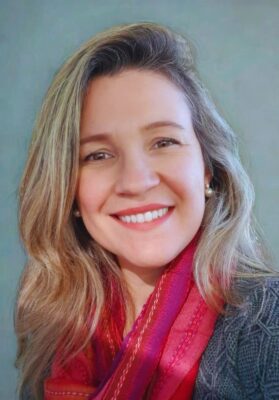
Dr. Letícia Cruz is an Associate Professor at the Federal University of Santa Maria and an advisor in the Graduate Program in Pharmaceutical Sciences at UFSM. She holds a Ph.D. in Pharmaceutical Sciences from the Federal University of Rio Grande do Sul and is a CNPq research productivity fellow – level 2, having published over 100 scientific articles and supervised 28 graduate theses. She has experience in the development and evaluation of nano- and microparticulate systems. She coordinates the Labtec-Nano Research Center, and her current projects focus on developing formulations for application on the skin and mucous membranes. She is a member of the Fiscal Council of the Brazilian Association of Pharmaceutical Sciences, the secretary of the Brazilian Local Chapter of the Controlled Release Society, a member of the editorial board of the journal Drug Delivery and Translational Research, and a member of the Institutional Committee for Technological Innovation at UFSM.
Josiane de Oliveira Feijó – Federal University of Pelotas, Brazil
Title of the lecture: Ignis Animal Science – From Research to Innovation.

Dr. Josiane Feijó is a Pharmacist and Biochemist, having a Master’s degree in Chemistry and a Ph.D. in Veterinary Medicine. She has been working for over 12 years in research and innovation, with experience in scientific and technological innovation, authoring over 50 scientific articles and holding 9 filed patents related to prototypes of nutritional supplements and controlled drug delivery platforms. Josiane is the Director of Ignis Animal Science, a company that develops innovative pharmaceutical and nutritional products for the animal health sector. Currently, IGNIS holds two licensed patents from UFPel, one of which has a product already on the market.
Regina Menezes Echaniz – University Lusófona, Portugal
Title of the lecture: POMANOX® and Metabolic Homeostasis: The Role of Ellagitannin Metabolites in Modulating β-Cell Function.
Dr. Regina Echaniz is a currently Principal Investigator of the Models & Molecular Mechanisms Laboratory, where she leads the Diabetes Research Group, Assistant Professor at the School of Health Sciences and Technologies (ECTS), and Director of Societal Impact and Community Engagement at CBIOS. She holds a degree in Biological Sciences (BS) and a Master’s in BS-Genetics. She pursued doctoral studies in BS-Genetics at the Federal University of Rio de Janeiro (UFRJ), during which she was awarded a highly competitive DAAD scholarship to conduct her PhD research at the Institut für Mikrobiologie of Heinrich Heine University Düsseldorf (HHUD). Her doctoral work elucidated key mechanisms in the molecular regulation of carbon source utilisation in model eukaryotes, contributing significantly to understanding metabolic gene regulation. As a postdoctoral researcher at Universidade Nova de Lisboa (UNL), she maintained her focus on the molecular mechanisms underlying cellular adaptation. In 2013, she led the development of the SMART (Simple Molecular Architecture Research Tool) yeast platform within the framework of an EU project. This pioneering platform facilitated the bioprospecting of bioactive molecules with therapeutic potential, contributing to the engineering of advanced model organisms and the discovery of novel bioactive compounds. Within this framework, she developed an innovative yeast model mimicking the proteotoxicity of islet amyloid polypeptide (IAPP), a histopathological hallmark of type 2 diabetes, associated with β-cell dysfunction and loss. These findings marked a pivotal shift in her research focus towards diabetes in 2016. Since then, her group has focused on elucidating the protective role of dietary (poly)phenolic metabolites against IAPP-induced β-cell dysfunction and on strategies to promote β-cell mass preservation and expansion. Her work has been recognised in both scientific and clinical settings, including the awards FAZER+ Research Excellence (COFAC/ILIND) and Nuno Castelo-Branco (Portuguese Diabetes Society), research funding from the Portuguese Science Foundation (FCT) and the iNOVA4Health Translational Medicine Programme. Her team has also secured prestigious fellowships and advanced training awards from FCT and the Fulbright Program.
DIAMOND SPONSORS


GOLD SPONSORS


